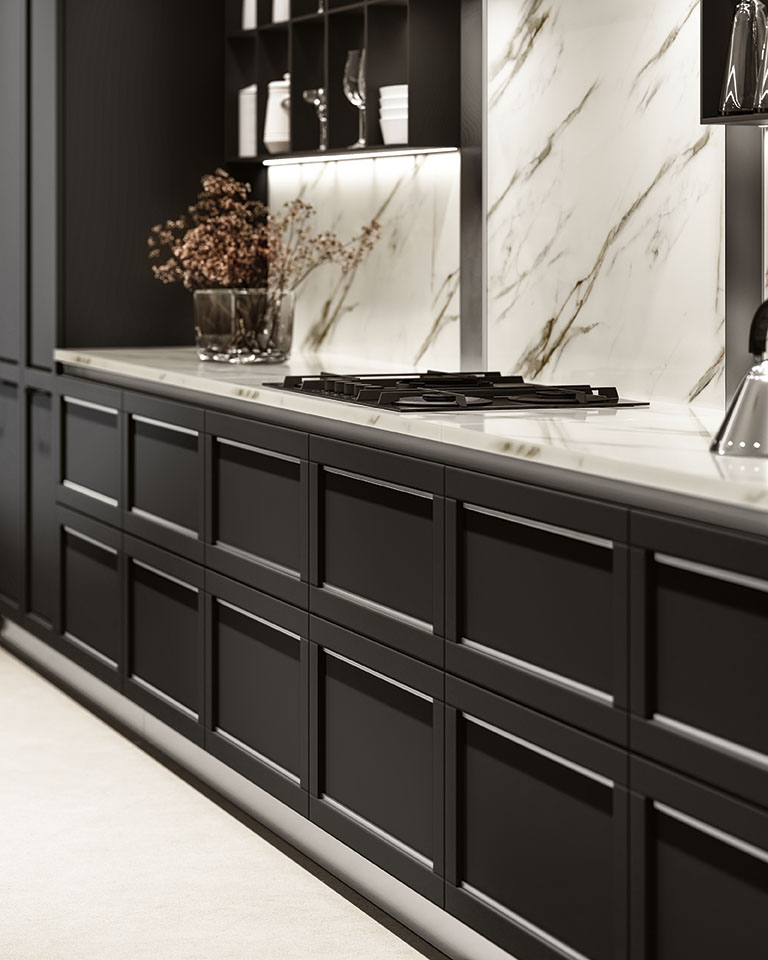
The choice of fingerprint-resistant finishes in glossy or matte kitchens addresses an increasingly common need among those designing or renovating kitchen spaces: keeping surfaces clean and uniform even after heavy daily use. Fingerprint-resistant finishes reduce the visibility of fingerprints, smudges, and minor signs of wear, ensuring a neat appearance over time. Among the most widely used technologies in this field are Fenix NTM and high-resistance matte surfaces, both designed to combine functionality with aesthetic appeal.
What Are Fingerprint-Resistant Finishes?
Fingerprint-resistant finishes are surfaces treated or made with specific materials that minimize the appearance of fingerprints and smudges caused by touch. This property stems from the surface’s microscopic structure, which reduces light reflection at contact points and evenly distributes any residue left by hands. Fingerprint-resistant finishes are particularly well-suited for kitchens, where cabinet doors, handles, and surfaces are subject to frequent contact during meal preparation.
Fenix NTM is a next-generation material used for cabinet doors and surfaces in modern kitchens, featuring a matte texture and high surface durability. The material’s composition gives the surface a leather-like feel while retaining the technical properties typical of high-performance laminates.
Scratch and light resistance
Fenix NTM offers good resistance to surface scratches, a useful feature in an environment subject to continuous use, such as the kitchen. The surface also maintains its color stability over time, with reduced sensitivity to the effects of direct light exposure—an important consideration for kitchens located near windows or sources of natural light.
Scratch and light resistance
One of the distinctive features of Fenix NTM is its ability to reduce the appearance of minor surface scratches through the localized application of heat. This process allows for the partial restoration of the surface’s uniformity without the need for complex interventions, helping to preserve the original appearance of the cabinet doors over time.
High-resistance matte finishes
In addition to Fenix NTM, matte finishes represent another category of fingerprint-resistant kitchen finishes, often created using specialized lacquers or dedicated laminates. These finishes reduce light reflection and minimize the visibility of fingerprints and minor signs of wear, maintaining a uniform appearance on the surface of the cabinet doors. The durability of these finishes also extends to exposure to common kitchen substances, such as grease and steam—elements that can affect the long-term appearance of glossy surfaces.
Fingerprint-resistant vs. glossy lacquer: a comparison
The comparison between fingerprint-resistant surfaces and high-gloss lacquer primarily concerns light reflection and the visibility of signs of wear. High-gloss lacquer offers intense color rendering and a reflective surface, but tends to show fingerprints, dust, and small scratches more prominently. Fingerprint-resistant finishes, on the other hand, provide a more discreet solution to these issues, maintaining a consistent appearance even after frequent use. The choice between the two types depends on the aesthetic and functional priorities of each project.
Fingerprint-resistant finishes for cabinets
Fingerprint-resistant finishes aren’t limited to the kitchen; they’re also used on cabinets and other furniture in both the living and sleeping areas. In fact, the same requirements for a clean appearance and resistance to daily wear and tear apply to areas subject to frequent hand contact, such as sliding doors and walk-in closets. The use of fingerprint-resistant materials in these contexts helps maintain a consistent style and perceived quality throughout the home.
Maintenance and Cleaning
Maintaining fingerprint-resistant surfaces is generally straightforward, thanks to the finish’s structure, which minimizes smudging. For daily cleaning, simply use a soft, slightly damp cloth, avoiding abrasive products that could damage the surface texture. The same guidelines apply to Fenix NTM, with the added precaution of not using harsh solvents that could compromise the material’s technical properties over time.
Febal Casa Solutions
Febal Casa offers a variety of modern kitchen configurations featuring fingerprint-resistant finishes, including Fenix NTM and highly durable matte finishes. Febal Casa retailers provide expert advice to help you choose the most suitable finish, based on the room’s style, usage habits, and long-term maintenance needs.
FAQ
What does “fingerprint-resistant finish” mean in a kitchen?
It refers to a surface made with materials or treatments that reduce the visibility of fingerprints and smudges, maintaining a uniform appearance over time.
Is Fenix NTM suitable for all kitchens?
Fenix NTM is well-suited for contemporary-style kitchens, thanks to its matte finish and durability suitable for daily use.
Do fingerprint-resistant surfaces require specific cleaning products?
No, a soft, slightly damp cloth is sufficient; avoid abrasive substances or harsh solvents.
What is the main difference between Fenix NTM and traditional matte laminate?
Fenix NTM features a leather-like texture and the ability to reduce the appearance of minor scratches using heat—a feature not found in traditional matte laminates.


 中文